Breadcrumb Trail Links
PMN Business
European natural gas traders are piling into an unusual seasonal bet — that prices will gain almost 50% by the summer — as they look to stockpile fuel for next winter.
Author of the article:

Published Feb 10, 2025 • 3 minute read

Article content
(Bloomberg) — European natural gas traders are piling into an unusual seasonal bet — that prices will gain almost 50% by the summer — as they look to stockpile fuel for next winter.
Article content
Article content
The trades, which run counter to the market’s typical historical pattern of valuing winter gas higher than summer, underscore the conviction that prices have further to climb as supply tightness fears dominate the market. Investment funds have already pushed bullish wagers on Intercontinental Exchange Inc. near an all-time high, and worries that normal shipping routes will be thrown into disarray by trade conflicts are adding uncertainty to an already volatile market.
Advertisement 2

Article content
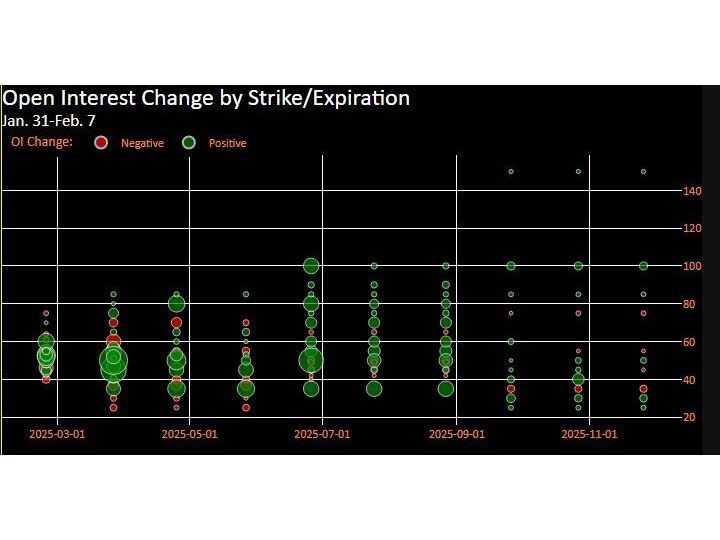
A flurry of bets that see European gas prices rallying to as much as €80 ($82.50) a megawatt-hour traded last week, according to data compiled by Bloomberg. Benchmark futures have gained almost 15% since the start of the year to around €55, trading near the highest in two years on concerns about rapidly depleting inventories.
Chilly and calm conditions across Europe that reduced wind power output have also boosted gas consumption this winter, leaving inventories just over half full compared with 69% at the same time last year. As a result, gas for delivery this summer has been trading above contracts for the following winter, making earlier purchases uneconomical for the next heating season. Officials in Europe are rushing to find a solution, with Italy bringing forward auctions to replenish inventories and Germany’s market manager discussing potential subsidies.
“Europe now has a backward curve, which means traders will not store,” said Francisco Blanch, commodity strategist at Bank of America Corp. “And in some ways, Europe severely impacted the price of storage by setting up a regulation that says you have to fill to 90%, so there’s no value in storage. The only way you can create some value in storage is through another market mechanism called price volatility.”

Top Stories
Article content
Advertisement 3
Article content
Europe has had to rely even more on volatile imports of liquefied natural gas since Russian pipeline flows through Ukraine came to a halt at the start of this year. That’s been pushing regional prices higher and keeping energy bills elevated, and will likely complicate stockpiling efforts during warmer months.
Part of the stockpiling season also coincides with the maintenance season across facilities in Norway, one of the region’s top suppliers of gas. While the works are a routine practice for gas facilities during summer — when demand is typically lower — the stakes are high once again as this time the storage levels are lower.
Last week’s series of trades included 3,000 contracts of July €80/€100 call spreads, a July-September 700-lot strip of €60/€70/€80 so-called call butterflies, and another 3,000 May €80 calls. This volume is rare in a market that usually trades around 200 lots or so at a clip. Aggregate call open interest hit a peak last week, while put open interest has been easing back from a November high.
Looking at other commodities, trading in natural gas globally is elevated, with CME Group Inc.’s Henry Hub options volume reaching a record in January. In New York, coffee call and put open interest is the highest in more than two years as arabica futures hit an all-time high. Interestingly, the call skew has been narrowing since mid-December even as prices reached new territory above $4 a pound.
Advertisement 4
Article content
However, other commodities such as gold are seeing less-than-stellar volume, as the steady churn higher keeps volatility muted. And crude oil’s swings on trade talk and geopolitical turmoil has left prices stuck in a range.
Gold and silver may not be the best for short-term trades, according to Darwei Kung, head of commodities at DWS Group, who noticed commodity trading advisors are engaging in other commodities.
“Obviously, nat gas’s movement has been very significant,” Kung said, adding that both positive and negative views have been driving prices up and down “quite a bit.” “That type of short-term volatility tends to drive those commodities to be more favored for CTA traders than have the short-term objectives.”
—With assistance from Yvonne Yue Li.
Article content
Share this article in your social network